The Great Migration isn't an event — it's a year-round circuit. Roughly 1.5 million wildebeest, plus hundreds of thousands of zebra and gazelle, move in a giant loop between Tanzania's Serengeti and Kenya's Maasai Mara, following the rain and the grass. The question isn't whether to see it, but which chapter of it you want to watch.
July to October: the river crossings
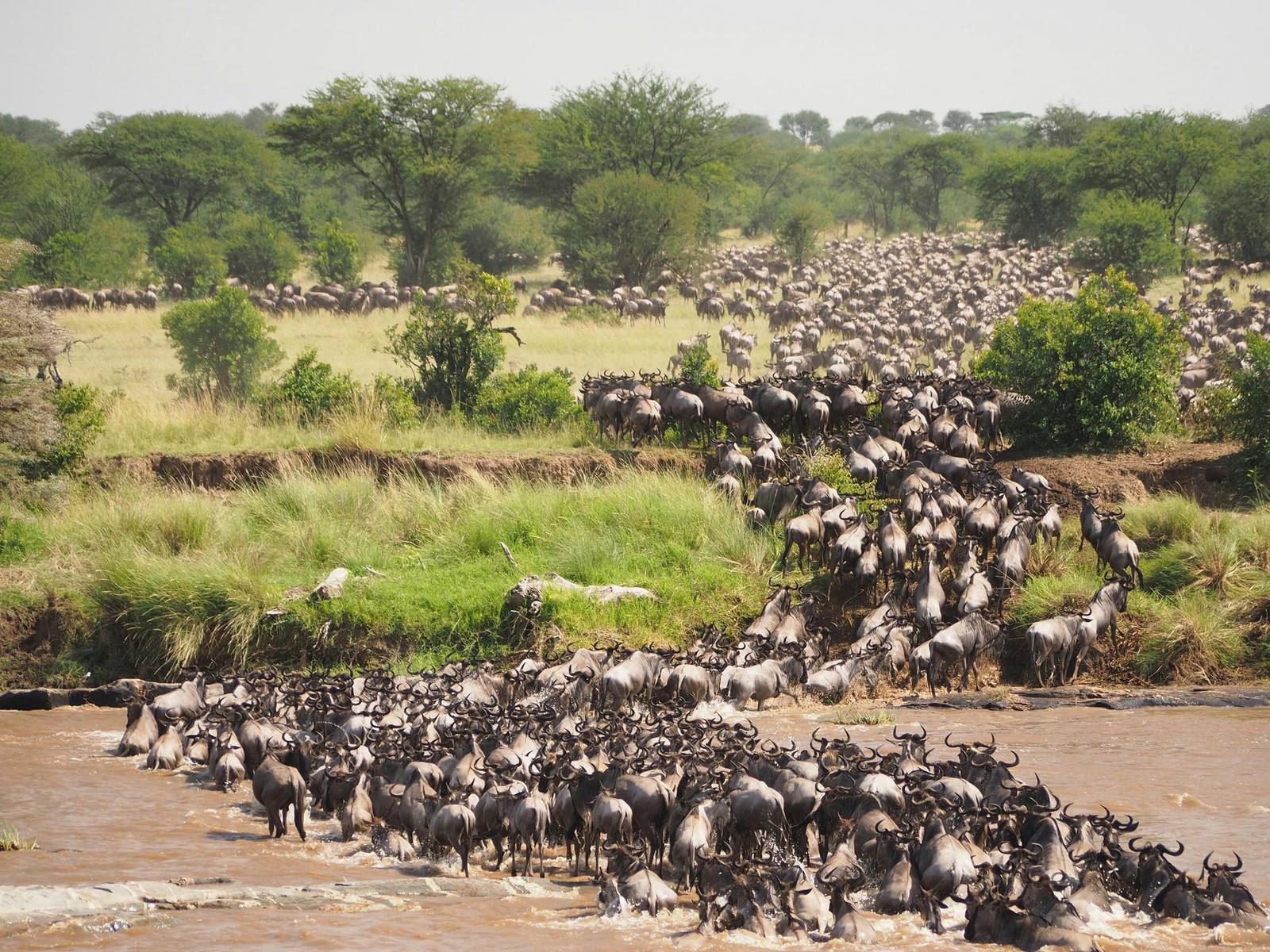
This is the famous one. The herds mass on the banks of the Mara River and cross in surges — crocodiles waiting below, big cats working the edges. If your dream is the dust-and-thunder crossing photograph, you want the northern Serengeti or the Mara between late July and early October. It's also peak season, so camps book out months ahead — reserve early.
January to March: calving season
On the short-grass plains of the southern Serengeti and Ndutu, around half a million calves are born within a few weeks. The plains turn green, predators arrive in numbers, and the action is relentless. It's arguably the best-kept secret of the Migration — fewer vehicles than the crossings, and extraordinary predator sightings.
April to June: the long march north
The herds swing through the western corridor and central Serengeti in long, snaking columns. April and May are quieter and greener — lower rates, moodier skies — though rain can make some roads heavy going.
So, when should you go?
For crossings, aim for August or September in the Mara. For calving and predators, February in the southern Serengeti. For value and space, the shoulder months either side. Tell us your dates and we'll tell you where the herds are most likely to be — then build the trip around them.
Ready to plan it? Tell us your dates — we reply within hours on WhatsApp with a tailored itinerary and clear USD pricing.